
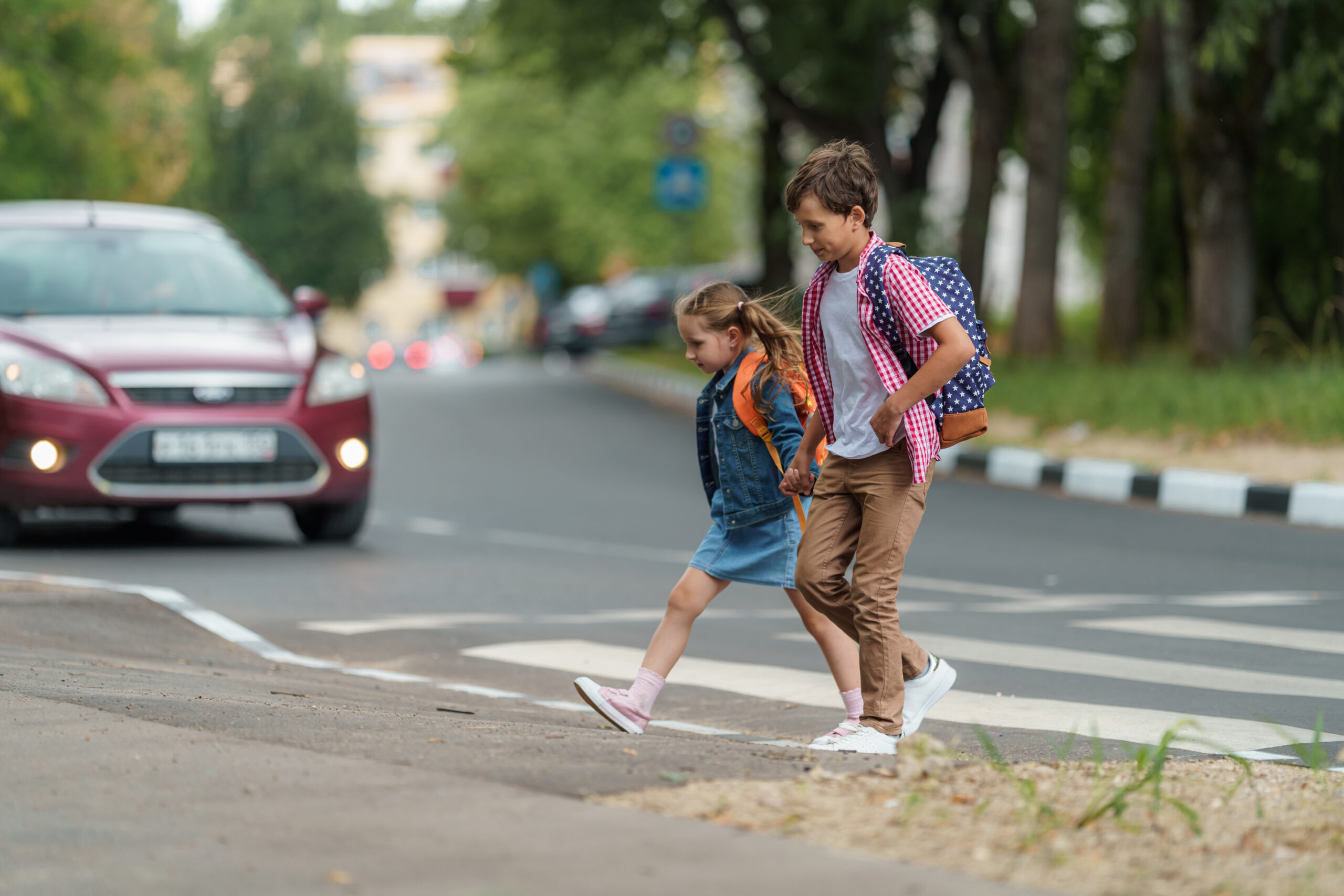

For most families living in the six states served by Saint Francis, a new school year has begun. That means more children and young people are now moving about in the mornings and afternoons. Pedestrian, bicycle, and motor vehicle traffic has bumped up a couple of notches, so we must be more alert and attentive as we drive our community’s streets, especially in school zones.
Fortunately, the U.S. Department of Transportation’s National Highway Traffic Safety Administration provides safety tips for motorists and parents to help keep kids safe during the school year, especially around school buses.
School buses are designed to safely transport students to school and back home each school day. But to do that, motorists must properly follow the law when traveling on the same road. Otherwise, the results can be tragic. When following a school bus, remember:
- Yellow flashing lights indicate the bus is preparing to stop to load or unload children. Slow down and prepare to stop.
- Red flashing lights and extended stop arms indicate the bus has stopped and children are getting on or disembarking. Stop your car and wait until the red lights stop flashing, the extended stop arm is withdrawn, and the bus begins moving. Then you can move forward again.
- Even when lights aren’t flashing, watch for children, especially in the morning or mid-afternoon, around school arrival and dismissal times.
Parents should also discuss school bus safety with their children by teaching them SAFE steps:
- Stay at least ten feet — five giant steps — away from the curb.
- Always wait until the bus comes to a complete stop and the bus driver tells you to board.
- Face forward after finding a seat on the bus.
- Exit only after the bus comes to a complete stop. Remember to look left-right-left for cars before crossing a street.
Motorists should also pay attention to the sun’s position. As we head into the fall, the morning sun can appear low enough in the sky to affect our ability to see pedestrians and bicyclists. Remain especially alert when backing out of driveways, driving through neighborhoods, or approaching school zones.
With more students walking, biking, and rolling to school than in past years, remember that distracted driving remains one of the biggest threats in school zones. A glance at a phone can mean missing a child stepping off a curb. Put phones away, slow down, and treat every school zone as if a child could step into the road at any moment.
These are just a few things to keep in mind as our children make their way to and from their classrooms. By staying alert and cautious, we can help ensure all our kids get to and from school safely. Check out the NHTSA website to learn more about road safety during the school year.